About the history and other aspects of Indonesian railways - Tentang sejarah dan berbagai aspek perkeretaapian Indonesia
An afternoon at Purwosari Station, Solo
Get link
Facebook
X
Pinterest
Email
Other Apps
-
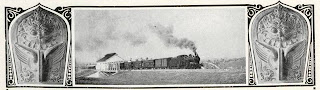
These pictures were taken at Purwosari station on the afternoon of 16 March 2010, while waiting for the Semarang bound Joglosemar train from Yogyakarta.
On 28 December 2008 the Indonesian Railways Preservation Society (IRPS) organised an excursion at the Cepu Forestry Railways . About 60 IRPS members, plus around 20 non-members, took part on this four hours trip. The 30 kilometer track from Cepu to the teakwood forest memorial at Gubug Payung is part of the Indonesian State Forestry Company’s 1067 mm Cape gauge rail network in the area, built in 1915. Most of the network, however, has been closed, and only a few sections, such as the Cepu-Gubug Payung line, remain. Route of the Cepu Forestry Railway Teakwood ( Tectona grandis L.f .) is not a native of Indonesia, but this high quality wood was already known in Java since the 14th century. Teakwood forests are mainly found along Java’s north coast. The best teakwood in the world are those grown in the hills of Cepu, Central Java. From pre-colonial days this area has supplied timber for the ship making industries of Tegal, Juana, Jepara, Rembang, Lasem and Tuban. By the end of the 19th...
There is no dispute that the first railway line in Indonesia was built between Semarang and Tanggung by the Nederlandsch_Indische Spoorweg Maatschappij (NIS). However, the exact location of Semarang’s first station is still subject to controversy. The official view of PTKA (Indonesian Railway Company) is that the first station was located in Kemi(d)jen, and was even called Kemidjen Station. Kemidjen Station in the railway company’s official history book. Other sources, such as Rietsma (1925), Liem (1933), Oegema (1982), van Ballegooien de Jong , (1993) de Bruin (2003), however, make no references of Kemi(d)jen. They all say that the first railway line was between Semarang (Samarang) and Tanggung (Tangoeng). Liem adds that the first NIS station was located near the port, in an area called Tambaksari. The use of the spelling Samarang was common till the 1880s. Thus, it is very likely that the first station in Semarang would also be called Samarang Station. The 1866 map of Semarang s...
. It is known that the Netherlands East Indies Railway Company, who’s new Administration Building in Semarang was put into operation in the beginning of July of 1907, some images of which are hereby presented, has built the first railway in Java. The first or trunk line was built to connect the booming Vorstenlanden of Surakarta (Solo) and Yogyakarta (Yogya) with Semarang, their natural sea port. That is how Semarang became and remains the Netherlands Indies seat of the 's-Gravenhage based company and of which the whole of the Indies owes so much, as it gave the impetus to the improvement of the traffic system in the East Indies. The main Semarang-Vorstenlanden line with the Kedoeng Djattie-William I branch line, now extending 206 kilometers, was, as far as its last section Solo Yogya is concerned, opened for public traffic on 10 June 1872 , and its branch line on 21 May 1873. This line is located in Central Java. In addition, almost simultaneo...


Comments